
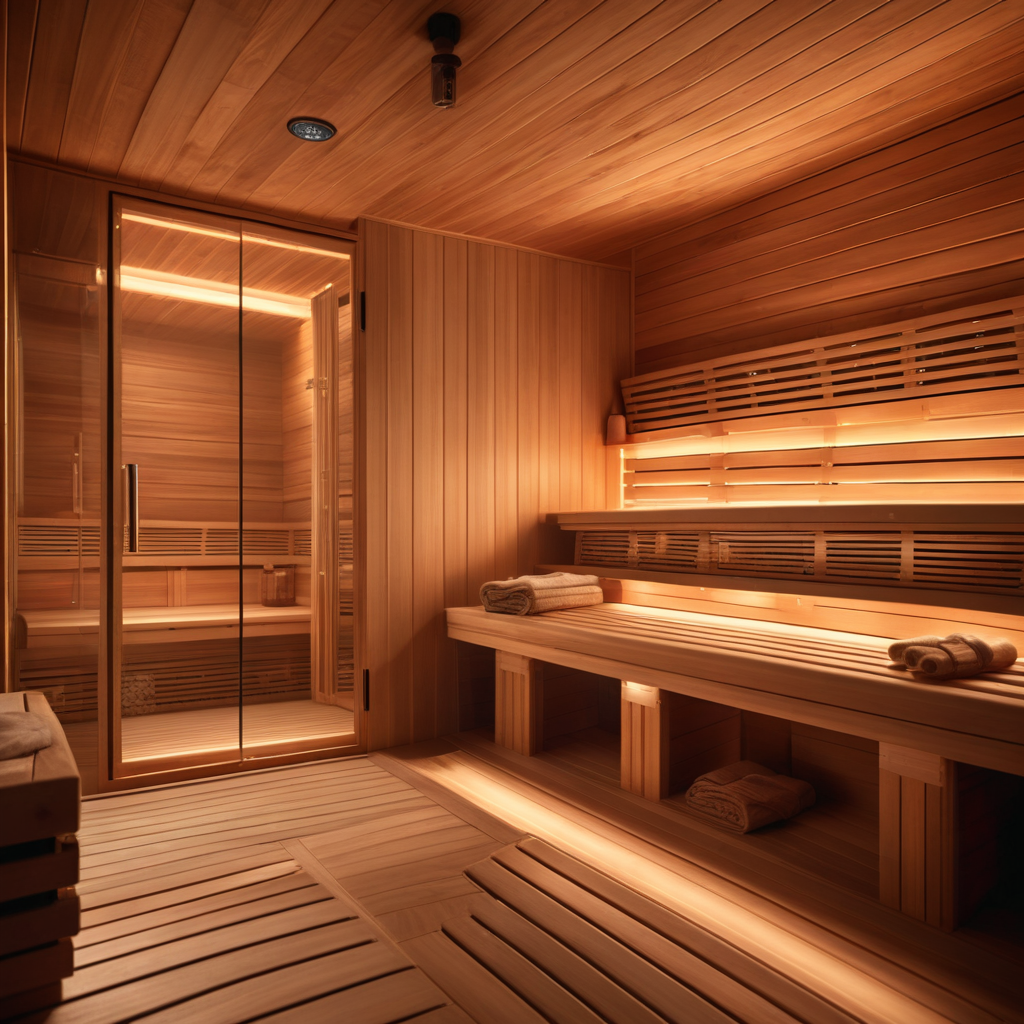
Heat Shock Proteins and Sauna Therapy: The Cellular Science Behind Recovery in Hong Kong
Focus keyword: sauna therapy Hong Kong heat shock proteins
Introduction
Sauna is often marketed as relaxation. In high-performance wellness environments, that framing is incomplete. The deeper value of sauna therapy is biological: controlled heat stress can activate cellular defense pathways—especially heat shock proteins (HSPs)—that are linked to recovery resilience, protein stability, vascular function, and long-term wellness outcomes. For hotels, clubs, and premium facilities in Hong Kong, the strategic question is no longer “should we offer sauna?” but “can we deliver sauna protocols with engineering precision, operational safety, and repeatable physiological value?”
That distinction matters. A sauna room that drifts in temperature, has poor airflow balance, inconsistent controls, or weak maintenance can undermine the very dose-response logic that heat therapy depends on. In other words: no precision, no consistency; no consistency, no credible outcomes.
What Are Heat Shock Proteins (HSPs) and Why Do They Matter?
Heat shock proteins are molecular chaperones produced by cells in response to stress, including thermal stress. Their core role is to protect proteins from misfolding, help repair damaged proteins, and preserve cellular function under strain.
HSP70: the most discussed recovery chaperone
HSP70 is widely studied in exercise and heat physiology literature. It is frequently associated with improved cellular stress tolerance and inflammation-modulating effects in controlled stress-recovery contexts.
Why wellness operators should care
- Protocol credibility: HSP-related benefits are dose-dependent, not random.
- Recovery positioning: sauna can be positioned as a controlled recovery intervention, not just amenity.
- Premium differentiation: engineered heat experiences create defensible quality against low-cost competitors.
The Science of Heat Therapy: What Current Literature Suggests
1) Heat therapy and cardiovascular health mechanisms
Recent reviews on heat therapy and cardiovascular physiology (e.g., Brunt et al., J Appl Physiol, 2021) outline mechanistic pathways including vascular shear effects, endothelial adaptations, and systemic stress-response signaling that support the clinical rationale for repeated, controlled heat exposure.
Practical implication: sauna outcomes should be managed as repeated dose cycles with stable environment control rather than occasional ad-hoc usage.
2) HSP expression and metabolic/inflammatory relevance
Clinical nutrition and metabolism literature discussing HSP70 and heat therapy (e.g., Krause et al., 2015) links heat-induced stress signaling to potential benefits in inflammation and metabolic regulation contexts. While outcomes vary by population and protocol design, mechanistic consistency is strong: controlled heat stress can induce protective cellular responses.
3) Population-level association data and session patterning
Large longitudinal data (Laukkanen et al., JAMA Intern Med, 2015) showed that higher sauna frequency and longer sessions were associated with lower fatal cardiovascular and all-cause mortality risk in the studied cohort. As with all observational data, causality must be interpreted carefully—but the directional pattern supports structured sauna use as part of a broader recovery-health strategy.
From Biology to Operations: Why Precision Is the Real Differentiator
Heat therapy is a dosing problem in disguise. Facilities that treat sauna as interior design often underperform. Facilities that treat sauna as an engineered protocol outperform.
Core engineering variables that influence outcomes
- Temperature stability: minimizing drift across session windows.
- Airflow and distribution: preventing uneven heat zones and false setpoint confidence.
- Humidity management: maintaining intended experience and comfort envelope.
- Control architecture: sensor calibration, response logic, and safe shutdown behavior.
- Maintenance integrity: scheduled checks to protect both efficacy and safety.
These are not secondary details. They determine whether your users receive a reproducible intervention or a variable, noisy experience with uncertain value.
Practical Protocol Logic for Hong Kong Facilities
Step 1: Define objective by user segment
- Hotel wellness guests: stress reduction + sleep support + premium ritual quality.
- Sports club users: post-training recovery routine integration.
- Corporate wellness users: short, structured sessions with clear safety guidance.
Step 2: Standardize thermal operating window
Instead of vague “hot enough” settings, define target operating bands and tolerance limits per facility model. Record deviations and corrective actions.
Step 3: Build staffing and SOP readiness
- Session guidance scripts for safe use
- Contraindication prompts and escalation rules
- Daily checklist for controls and sanitation
- Incident logging and response SLA
Step 4: Track outcome-proxy KPIs
- Session consistency score (temperature/humidity variance)
- Unplanned downtime rate
- Complaint-to-session ratio
- Maintenance response time
- Repeat-usage trend by member/guest cohort
Common Failure Modes in Premium Sauna Deployments
Failure mode A: Overemphasis on aesthetics, underinvestment in controls
Beautiful room, poor process. Result: inconsistent thermal delivery and weaker user outcomes.
Failure mode B: No maintenance contract discipline
Small calibration drift accumulates into unstable operation. By the time issues become visible, customer trust is already damaged.
Failure mode C: No protocol ownership
If nobody owns operating windows, logs, and corrective actions, the system defaults to reactive firefighting.
Where Kung Sheung Fits in the Value Chain
For Hong Kong projects, the technical challenge is rarely selecting a heater alone. The challenge is integrating architecture, controls, MEP constraints, commissioning, and service continuity into one coherent system lifecycle.
This is where product supply and engineering execution must be coupled. Facilities planning sauna-led recovery zones can align with local engineering-led delivery models and suitable wellness equipment portfolios, including integrated project support through Kung Sheung’s category infrastructure and service model.
For commercial deployment planning and related solution options, refer to: Hong Kong wellness and pool-spa engineering category.
Executive Decision Framework (For Owners and GMs)
- Ask for engineering evidence, not only product sheets.
- Require commissioning criteria under real operating load.
- Demand maintenance governance with measurable SLA.
- Treat sauna as recurring service quality, not one-time capex.
Facilities that follow this framework usually convert wellness capex into a stable experience asset. Facilities that skip it often pay twice: first for installation, then for correction.
Implementation Playbook for HK/Macau/GBA Operators
Phase 1: Technical discovery (Week 1-2)
- Audit electrical and ventilation constraints.
- Map expected user throughput by time block.
- Define thermal envelope targets and tolerance.
- Identify compliance and EHS requirements by site type.
Phase 2: Engineering design and procurement (Week 3-5)
- Select system architecture aligned with occupancy profile.
- Validate controls logic, sensor placement, and fail-safe behavior.
- Align civil/MEP interfaces to avoid late-stage rework.
- Lock spare parts and preventive maintenance plan before go-live.
Phase 3: Commissioning and service readiness (Week 6-8)
- Commission under realistic user load, not empty-room settings.
- Train operators with concise SOP + escalation matrix.
- Set baseline KPI targets for first 90 operational days.
- Schedule post-launch review at day 30 and day 90.
Business Case: Why Engineering-Grade Sauna Pays Back
For commercial operators, thermal-recovery assets should be evaluated as service infrastructure. Better reliability and protocol consistency reduce hidden costs such as service interruptions, guest dissatisfaction, and unplanned corrective maintenance. This shifts sauna from a static amenity to a retention and premium-experience engine.
- Revenue quality: stronger premium package positioning for wellness programs.
- Cost stability: fewer emergency interventions and less reactive maintenance.
- Brand protection: improved consistency in guest/member experience.
- Operational confidence: measurable performance rather than anecdotal success.
Conclusion
Heat shock proteins are not a marketing buzzword—they are part of the biological rationale for controlled heat therapy. Sauna can support recovery and wellness strategy at a high level, but only when the system is engineered and operated with protocol precision. In Hong Kong’s premium environment, consistency is the product.
Kung Sheung provides a Hong Kong based engineering team, same-day response, maintenance contract available for facilities that need sauna performance aligned with scientific intent, operational reliability, and premium guest experience.
References
- Brunt VE, et al. Heat therapy: mechanistic underpinnings and applications to cardiovascular health. J Appl Physiol. 2021. PMID: 33792402. https://pubmed.ncbi.nlm.nih.gov/33792402/
- Krause M, et al. Heat shock proteins and heat therapy for type 2 diabetes: pros and cons. Curr Opin Clin Nutr Metab Care. 2015. PMID: 26049635. https://pubmed.ncbi.nlm.nih.gov/26049635/
- Laukkanen T, et al. Association between sauna bathing and fatal cardiovascular and all-cause mortality events. JAMA Intern Med. 2015. PMID: 25705824. https://pubmed.ncbi.nlm.nih.gov/25705824/
Ready to Engineer Your Wellness Facility?
Precision cold plunge systems, pool equipment, and full installation & maintenance across HK, Macau & GBA.