
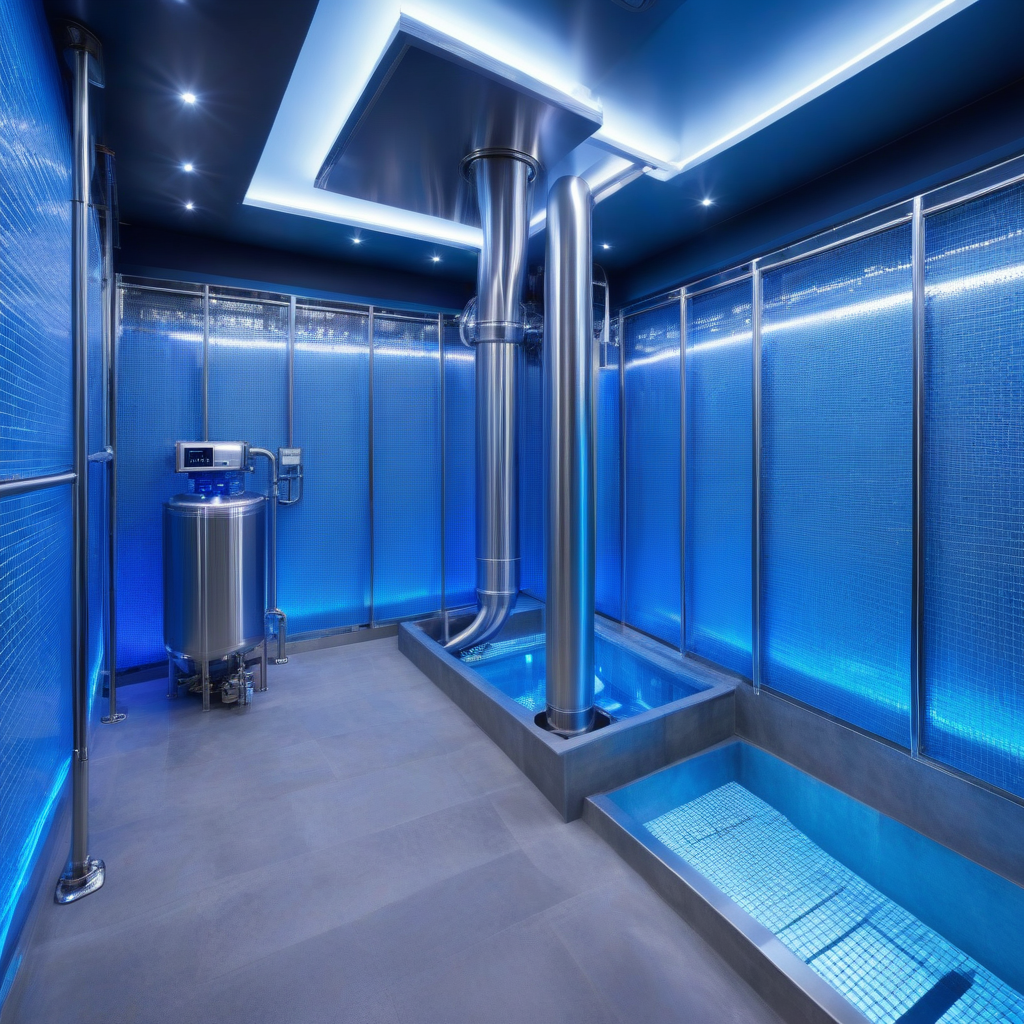
Ozone vs. UV Filtration in Commercial Cold Plunge Pools: Engineering Guide for HK Facilities
Focus keyword: commercial cold plunge filtration Hong Kong
Introduction
In high-traffic cold plunge environments, water quality is not a cosmetic issue; it is a risk-management issue tied to guest safety, downtime, and brand trust. Many operators in Hong Kong ask the same question: should we use ozone or UV for commercial cold plunge filtration? The short answer is that both can be effective, but they solve different parts of the problem. UV is a powerful point disinfection barrier inside the treatment train, while ozone is a strong oxidation tool that can reduce combined organics and improve clarity when engineered correctly. The right architecture depends on bather load, turnover rate, hydraulic design, and operating discipline.
This guide is written for hotel engineering teams, wellness directors, and facility managers in Hong Kong, Macau, and the GBA who need a practical, engineering-first framework—not generic vendor claims.
The Science: What UV and Ozone Actually Do
UV-C (typically 254 nm): microbial DNA/RNA disruption
UV systems used in aquatic treatment usually target UV-C wavelengths around 254 nm. At this wavelength, UV damages microbial nucleic acids and prevents replication. In practical terms, UV can be highly effective against many bacteria and viruses when the delivered dose (mJ/cm²) is sufficient and reactor hydraulics are well controlled.
Key engineering point: UV performance is dose-dependent. Dose is not just lamp power; it depends on UV transmittance (UVT), flow, reactor geometry, sleeve cleanliness, and lamp aging. If the system is oversized on paper but under-maintained in operation, delivered dose drops quickly.
Ozone (O3): strong oxidation and supplemental disinfection
Ozone is a high-oxidation-potential molecule used to break down organic contaminants and reduce disinfection by-product precursors. In a properly designed side-stream or contact chamber setup, ozone can significantly improve oxidation capacity and water appearance. It can also provide disinfection benefits under controlled contact-time conditions.
Key engineering point: ozone is not a “set-and-forget” addon. It requires controlled injection, off-gas destruction, ORP-informed operation, and compatibility with core residual sanitizer strategy.
What the Research and Standards Direction Indicate
Across public-health and water-treatment literature, a consistent pattern appears:
- UV at 254 nm is broadly accepted as an effective supplemental disinfection barrier in recirculating aquatic systems when dose is validated.
- Ozone is highly effective for oxidation and can contribute to microbial control, but requires stricter process control and safety engineering.
- Neither UV nor ozone replaces core hydraulic design, filtration fundamentals, and residual disinfection governance.
For commercial facilities, this means technology selection should be based on measured process outcomes: turbidity trend, ORP stability, microbial compliance, and downtime risk—not brochure claims.
Engineering Comparison: Ozone vs UV for Commercial Cold Plunge
1) Microbial control profile
- UV: excellent in-line inactivation when dose is maintained; no persistent residual in basin.
- Ozone: strong oxidation and disinfection potential in contact systems; residual handling and off-gas safety are critical.
2) Operational complexity
- UV: moderate complexity; periodic lamp/sleeve maintenance, UV sensor verification, and dose monitoring.
- Ozone: higher complexity; generator maintenance, injector/contact optimization, gas management, and safety controls.
3) Impact on water quality aesthetics
- UV: primarily disinfection support; less direct oxidation of dissolved organics.
- Ozone: stronger oxidation behavior, often better support for clarity and organic load reduction when tuned.
4) Safety and compliance burden
- UV: lower chemical safety burden; still requires electrical and exposure-safe engineering.
- Ozone: higher EHS burden; needs robust gas containment, ventilation, and destruction systems.
5) Best-fit deployment pattern
- UV-first architecture: facilities prioritizing lower operational complexity and strong microbial barrier control.
- Ozone + UV hybrid: premium sites with high bather load and strict clarity/odor standards, supported by skilled O&M.
Critical Design Parameters for Hong Kong Facilities
UV systems
- Wavelength: UV-C around 254 nm for standard disinfection reactors.
- Dose governance: define minimum delivered dose at design flow and worst-case UVT.
- Hydraulics: avoid bypass behavior and short-circuiting in reactor train.
- Maintenance: lamp replacement interval, sleeve cleaning schedule, sensor calibration SOP.
Ozone systems
- Injection & contact: engineering for adequate mass transfer and contact time.
- Off-gas destruction: mandatory for enclosed mechanical spaces.
- Control strategy: ORP and process interlocks to avoid unstable operation.
- Materials compatibility: seals, gaskets, and components must be ozone-compatible.
Shared non-negotiables
- Correct turnover and filtration sizing
- Commissioning tests under realistic load
- Documented SOP for daily/weekly/monthly QA
- Fast-response maintenance pathway for faults
Practical Decision Framework (Hotel, Clubhouse, Performance Centers)
Choose UV-first when:
- team capacity for complex gas systems is limited,
- you need robust supplemental disinfection with simpler O&M,
- your operating model prioritizes predictability and uptime.
Choose Ozone + UV when:
- you have high organic load and high utilization windows,
- you can support advanced controls and safety procedures,
- you need premium water aesthetics with stronger oxidation support.
In both cases, the highest failure mode is not technology choice—it is poor engineering integration and weak maintenance execution.
Why Professional Engineering Matters in Hong Kong
Commercial cold plunge systems in Hong Kong operate under dense usage patterns, constrained plant spaces, and strict service expectations. Generic equipment packages often underperform because they are not commissioned as complete systems. In practice, success depends on three things:
- temperature stability under repeated use cycles,
- water treatment consistency under variable load,
- service continuity with same-day troubleshooting.
That is why facilities increasingly prefer integrated deployments from local engineering teams rather than piecemeal supplier stacks. For projects requiring end-to-end specification, installation, and maintenance support, Kung Sheung’s commercial pool and spa range can be reviewed here: pool and spa engineering solutions in Hong Kong.
How to Implement Without Operational Surprises
- Define treatment objectives: microbial risk class, clarity targets, utilization profile.
- Run design basis calculations: flow, turnover, UVT assumptions, oxidation demand profile.
- Select architecture: UV-first or ozone+UV hybrid based on lifecycle capability.
- Commission under load: prove performance at realistic occupancy, not showroom conditions.
- Lock O&M governance: KPI dashboard (dose proxy, ORP trend, downtime, response time).
Operational KPI Checklist for Facility Managers
If you want predictable outcomes instead of reactive firefighting, run your filtration system like an engineered service line with weekly KPI review:
- Water-quality stability: trend deviations, not one-off snapshots.
- Disinfection confidence: verify UV reactor conditions and treatment-chain integrity under real flow.
- Oxidation performance: monitor organic load behavior and intervention frequency.
- Downtime profile: classify failures by cause (mechanical, control, chemical process, operator error).
- Response SLA: mean time to acknowledge, diagnose, and restore.
- Lifecycle economics: maintenance cost per operating hour and avoidable callout ratio.
Frequently Asked Questions (HK Commercial Context)
Can UV alone replace all chemistry?
No. UV is a strong supplemental barrier, but water management still needs a complete treatment strategy, circulation discipline, and operational controls.
Is ozone always better than UV for premium clubs?
Not automatically. Ozone can deliver excellent oxidation support, but only if the facility can maintain process controls, contact design, and gas safety requirements consistently.
What is the most common failure in cold plunge filtration upgrades?
Underspecified integration: equipment is selected, but hydraulics, controls, and operating SOP are not aligned. This creates unstable quality and recurring downtime.
How should HK operators make a final technology decision?
Use a trial-based engineering decision: define target outcomes, commission under realistic load, compare stability and maintenance burden, then lock the architecture.
Conclusion
For commercial cold plunge filtration in Hong Kong, “ozone vs UV” is the wrong question if asked in isolation. The right question is: which architecture can your facility run reliably, safely, and consistently at target quality? UV offers a dependable supplemental disinfection barrier when engineered for dose integrity. Ozone provides stronger oxidation benefits when process control and safety design are mature. High-performance facilities often combine both—but only with disciplined engineering and maintenance.
Kung Sheung provides a Hong Kong based engineering team, same-day response, maintenance contract available for facilities that need filtration performance aligned with real-world uptime and compliance demands.
References
- US EPA – UV Disinfection Guidance (drinking water framework and UV dose principles): https://www.epa.gov/dwreginfo/long-term-2-enhanced-surface-water-treatment-rule-documents
- WHO – Ozone in Drinking-water Background Document (oxidation/disinfection fundamentals): https://www.who.int/water_sanitation_health/dwq/chemicals/ozone.pdf
- NCBI/PubMed topic query for pool/UV disinfection evidence base: https://pubmed.ncbi.nlm.nih.gov/?term=swimming+pool+UV+disinfection
Ready to Engineer Your Wellness Facility?
Precision cold plunge systems, pool equipment, and full installation & maintenance across HK, Macau & GBA.