
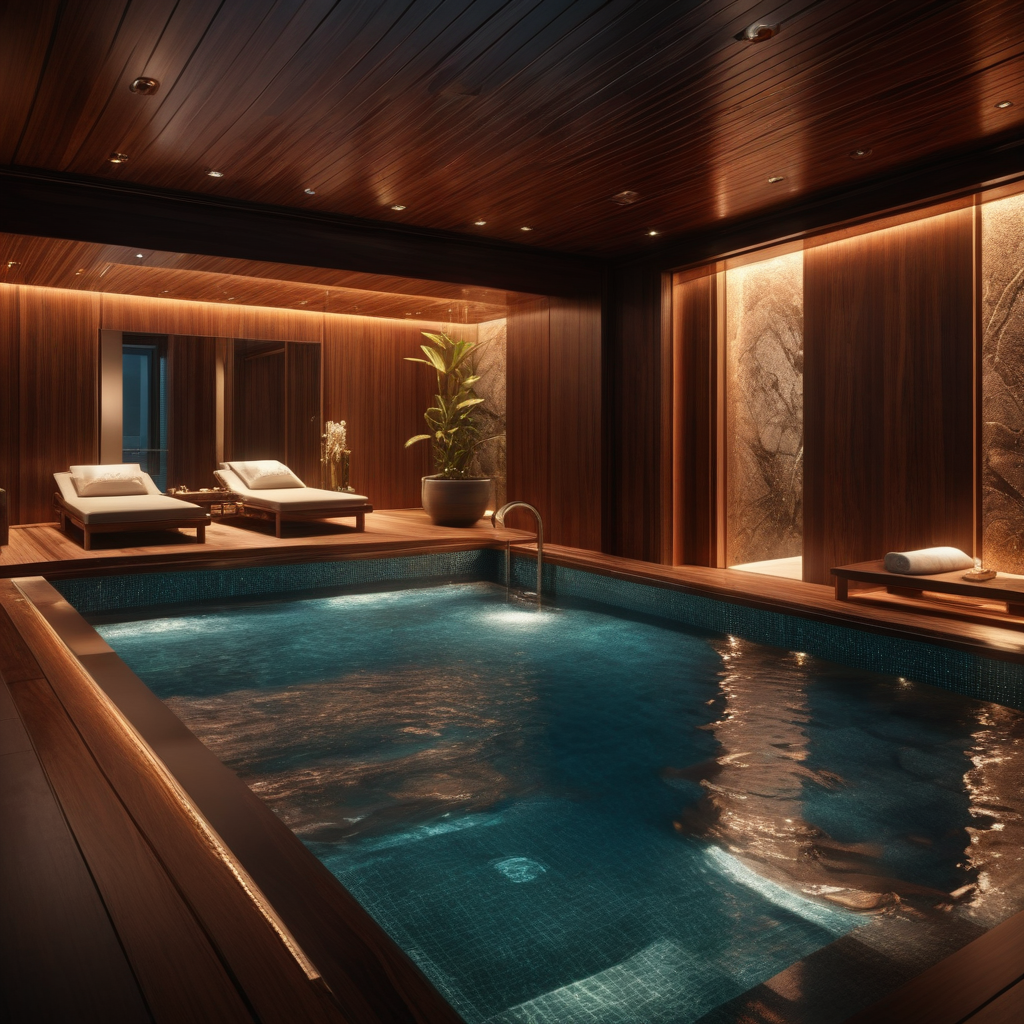
The Science of Cold Exposure: How 11°C Water Triggers Dopamine and Reduces Inflammation
Introduction
What separates a premium cold therapy facility from a standard “ice bath corner”? In one word: precision. The science of cold-water exposure is no longer theoretical. Peer-reviewed research now shows that temperature and exposure dose can significantly influence neurochemical response, recovery perception, and inflammatory markers. But these benefits are protocol-dependent. If water temperature drifts, if filtration is unstable, or if operating conditions vary day to day, outcomes become inconsistent.
For hotel spas, sports clubs, and wellness operators across Hong Kong, Macau, and the Greater Bay Area, this creates a strategic gap: clients expect measurable results, while many systems are not engineered to deliver repeatable physiology.
The Science Behind Cold Exposure
1) Neurochemical response: dopamine and norepinephrine
One of the biggest reasons cold exposure has moved into performance and wellness programs is its effect on alertness and mood-related neurochemistry. Human cold exposure work (including the protocol popularized through Søberg’s research context) is frequently associated with substantial acute catecholamine response, including norepinephrine elevation and reported large shifts in dopamine signaling in controlled cold protocols.
For facility operators, the key implication is practical: if your target protocol is near 11°C, your system must hold that temperature consistently across user cycles. A drift from 11°C to 15–16°C can materially change physiological stimulus intensity.
2) Recovery and soreness outcomes
A major Sports Medicine review on water immersion recovery reports that cold-water immersion in roughly 10–15°C for 5–15 minutes appears effective for short-term performance recovery in many settings (Versey et al., 2013, PMID: 23743793). This has been reinforced by later evidence syntheses showing CWI’s comparative benefit for soreness outcomes after strenuous exercise.
3) Inflammatory load and biomarkers
Clinical and sport-recovery literature often evaluates post-exercise inflammation with markers such as IL-6 and CRP, alongside creatine kinase and soreness metrics. The practical message for operators is not “cold is always better,” but “dose and consistency matter.” Inconsistency in thermal exposure creates inconsistency in biological response.
What the Research Shows (With Practical Meaning)
Evidence point A: 10–15°C and protocol control
Versey et al. (Sports Med, 2013) categorize CWI and summarize that 10–15°C for 5–15 minutes is a frequently effective practical range for recovery contexts.
- Source: https://pubmed.ncbi.nlm.nih.gov/23743793/
- Operational takeaway: target range must be stable under load, not only at startup.
Evidence point B: CWI outperforms several common alternatives for soreness recovery
Moore et al. (Sports Med, 2023; meta-analysis) report CWI as superior to several common modalities for soreness recovery after acute strenuous exercise.
- Source: https://pubmed.ncbi.nlm.nih.gov/36527593/
- Operational takeaway: benefit depends on delivery quality and adherence to protocol variables.
Evidence point C: temperature and duration directly influence thermal effect
Stephens et al. (Int J Sports Physiol Perform, 2018; pooled-data analysis) showed that lower water temperature and longer exposure altered core-temperature response significantly.
- Source: https://pubmed.ncbi.nlm.nih.gov/29283744/
- Operational takeaway: if systems cannot hold target temperature, your protocol is no longer the protocol.
Why This Matters for Hong Kong Facilities
Hong Kong wellness environments have unique operating demands:
- High-throughput usage windows
- Tight mechanical/electrical space constraints
- Elevated guest expectations in premium segments
- Reputation risk when wellness outcomes are inconsistent
In this context, “consumer-grade cold tubs” are rarely fit for serious commercial operation. Many standard units cannot maintain stable temperature during repeated sessions, especially when ambient conditions and user turnover increase thermal load.
Practical Application for Hotel Spas and Sports Clubs
Build around protocol, not product brochures
Start with a structured implementation brief before buying equipment:
- User profile mix (athletes, wellness guests, rehabilitation users)
- Peak-hour throughput assumptions (sessions per hour)
- Allowed thermal tolerance band (for example ±0.5°C around target)
- Hygiene protocol requirements (turnover, filtration, sanitization)
- Operations ownership (who checks logs, who approves corrective action)
This pre-engineering phase prevents a common failure pattern: high capital spend on visually attractive equipment that cannot maintain protocol quality in real operation.
Design for queue reality, not single-user demos
Most brochure demonstrations are done under low load. Commercial conditions are different. As user turnover increases, thermal stress increases and many systems begin to drift. That drift is exactly what erodes intervention quality.
A robust system architecture should include:
- Chiller sizing based on real thermal load, not nominal specs
- Flow design that minimizes dead zones and thermal stratification
- Control logic calibrated for rapid recovery between sessions
- Sensor placement and verification routines for trustworthy readings
Treat temperature precision as a business KPI
For premium facilities, this is not only a clinical or performance issue. It is a commercial KPI tied to retention, reviews, and perceived value.
If a client books an evidence-based recovery service, and the delivered protocol is inconsistent, the customer experience degrades even when aesthetics are excellent. Precision is therefore both a physiological requirement and a brand protection strategy.
Operational governance: what managers should measure weekly
A practical governance dashboard can include:
- Mean and max deviation from target immersion temperature
- Average pull-down time after each session cycle
- Number of protocol interruptions due to thermal instability
- Water-quality compliance checks per week
- Mean service response time for corrective maintenance
These metrics allow operators to run cold therapy as a controlled service line, not a decorative amenity.
Staff enablement and user guidance
Even the best hardware can underperform if operational guidance is weak. Teams should standardize:
- Session briefings and contraindication screening prompts
- Time/temperature signage aligned with facility protocol
- Escalation procedures when readings drift beyond tolerance
- Post-session feedback capture to improve protocol adherence
This closes the loop between engineering design and user experience delivery. Start with a protocol definition:
- Temperature target (e.g., 11°C band)
- Exposure duration (e.g., 5–15 min depending on user profile)
- Session throughput assumptions
- Hygiene turnover and filtration requirements
Then engineer the system backward from those requirements.
Monitor consistency, not just equipment uptime
A unit can be “running” and still fail therapeutically. Meaningful KPIs include:
- Temperature stability variance across peak hours
- Pull-down time between consecutive users
- Filter performance and water clarity metrics
- Maintenance response SLAs
Keep science and safety aligned
Cold exposure should be implemented with clear contraindication awareness, supervision standards where needed, and medically sensible program design for non-athlete users.
How to Get Started (Hong Kong / Macau / GBA)
If your facility wants evidence-based cold therapy outcomes, design decisions must align with physiology. This is where professionally engineered systems outperform off-the-shelf setups.
For operators planning new builds or upgrades, the most reliable path is to work with precision-engineered cold plunge systems built for commercial stability and service continuity. See Kung Sheung’s iCoolSport category for relevant platform options: commercial cold plunge and chiller solutions.
When projects require full system integration—temperature control, filtration architecture, commissioning, and aftercare—pair hardware with local engineering execution and maintenance planning. Kung Sheung’s Hong Kong team supports this deployment model with same-day response and contract-based support structure suitable for premium facilities.
A second useful reference for procurement and planning teams is the complete product landscape in the same ecosystem: iCoolSport system range for HK facilities.
Conclusion
Cold exposure is powerful when delivered precisely. The strongest evidence does not support random “cold dips”; it supports controlled, repeatable, protocol-driven immersion. For operators in Hong Kong and the Greater Bay Area, the real differentiator is engineering fidelity: temperature precision, hygienic stability, and reliable maintenance.
That is why many premium facilities move away from generic units and toward specialist infrastructure—because consistent recovery outcomes require consistent thermal control. In short: science-based results need science-grade systems.
For decision-makers, the strategic message is simple: if you want repeatable wellness outcomes, engineer the process end to end. Precision temperature control, disciplined maintenance, and local technical accountability are not optional extras—they are the foundation of measurable, defensible performance in every operating cycle.
—
References
1. Versey NG, Halson SL, Dawson BT. *Water immersion recovery for athletes: effect on exercise performance and practical recommendations.* Sports Med. 2013. PMID: 23743793. https://pubmed.ncbi.nlm.nih.gov/23743793/
2. Moore E, et al. *Effects of Cold-Water Immersion Compared with Other Recovery Modalities…* Sports Med. 2023. PMID: 36527593. https://pubmed.ncbi.nlm.nih.gov/36527593/
3. Stephens JM, et al. *Core Temperature Responses to Cold-Water Immersion Recovery: A Pooled-Data Analysis.* IJSPP. 2018. PMID: 29283744. https://pubmed.ncbi.nlm.nih.gov/29283744/
4. Bleakley C, et al. *Cold-water immersion (cryotherapy) for preventing and treating muscle soreness after exercise.* Cochrane. 2012. PMID: 22336838. https://pubmed.ncbi.nlm.nih.gov/22336838/
Ready to Engineer Your Wellness Facility?
Precision cold plunge systems, pool equipment, and full installation & maintenance across HK, Macau & GBA.