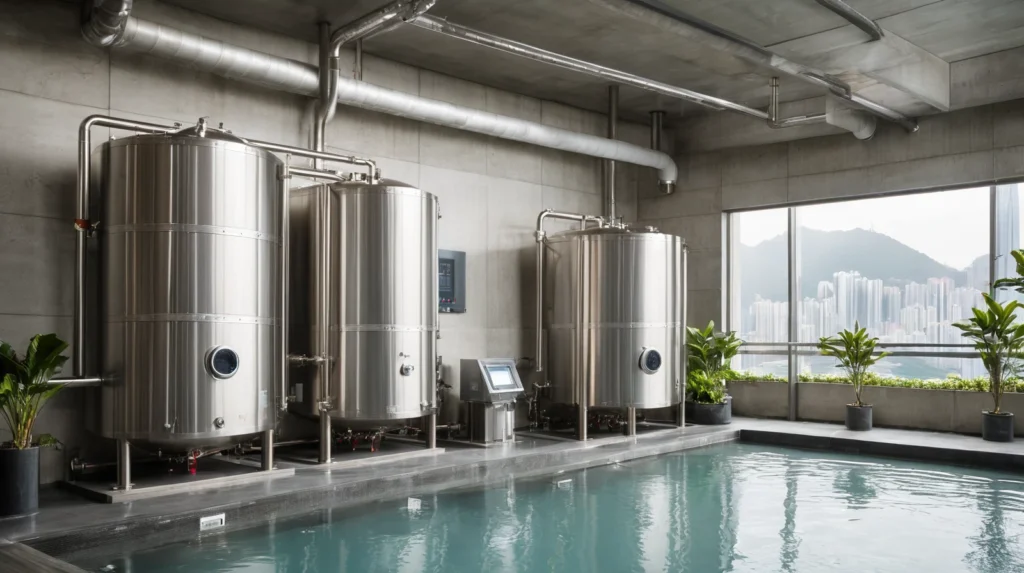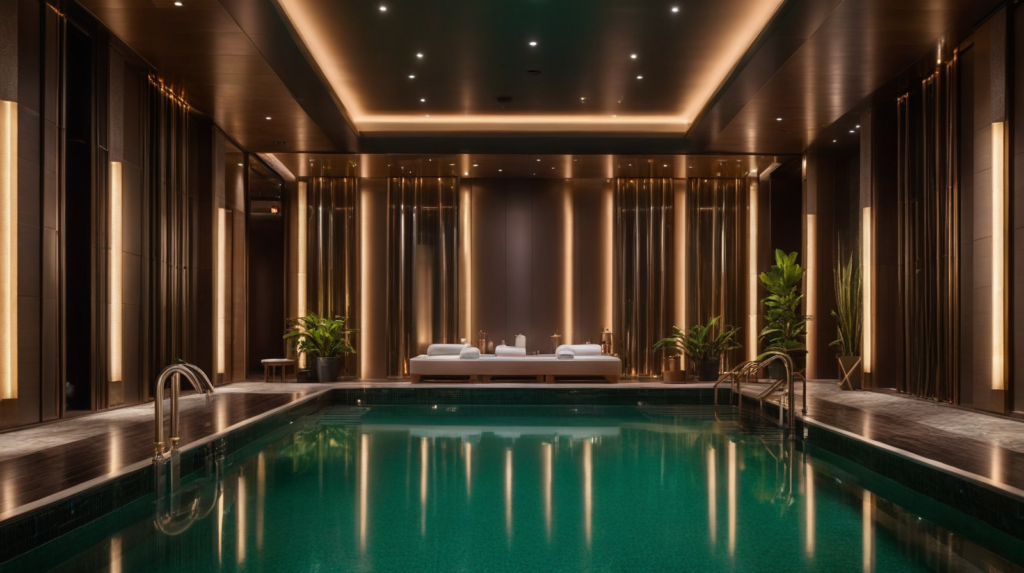
Executive Summary A true luxury cold plunge is not just a tub of cold water; it is a 1,000kg+ vessel of dynamic thermodynamics inside a finished property. The difference between a successful amenity and a catastrophic property damage claim lies in professional installation. This article outlines the critical engineering factors: condensation, structural load, and electrical safety. The surge in popularity of cold water immersion (CWI) has led to a flood of residential-grade “ice baths.” While these may suffice for a balcony, they pose significant risks in high-end commercial or luxury residential settings in Hong Kong. 1. The Physics of Condensation (The “Sweating” Problem) Hong Kong often sees relative humidity above 85%. When you introduce a vessel of water at 8°C into a room at 25°C, the temperature difference hits the dew point immediately. ⚠️ The Risk Without insulation and vapor barriers, equipment will “sweat” continuously. This creates hidden water accumulation, black mold, and structural rot. ✅ The Solution We use closed-cell elastomeric insulation and vapor-sealed plant room designs to mechanically prevent condensation. 2. Structural Load and Waterproofing A standard 4-person cold plunge holds roughly 1,500 liters. Including vessel weight and users, the “live load” can exceed 2,000kg. Engineering Check: Many residential slabs are not designed for this point load. We always start with a structural review. Waterproofing: In high-rise buildings, a leak is a disaster. We implement secondary containment trays and moisture-detection sensors that auto-shutoff supply valves. 3. Electrical Safety in Wet Environments Combining high-voltage chiller compressors with conductive salt water requires strict adherence to EMSD codes. Critical Safety: All conductive parts must be equipotentially bonded. DIY units often lack the localized bonding required by Hong Kong code. 4. Heat Rejection Dynamics A chiller moves heat from water to air. A powerful unit will turn a small, unventilated room into an oven within minutes, causing the system to trip. The Fix: We calculate BTU/hr rejection and duct heat away, or use water-cooled condensers connected to the building’s central loop. Conclusion: Invest in Infrastructure For luxury homeowners and hotel operators, the value of a cold plunge is in its availability and safety. The Kung Sheung Promise We approach installation as a construction project, not an appliance delivery. We ensure your investment is safe, compliant, and built to last in Hong Kong’s demanding climate. References ASHRAE Handbook – Fundamentals (Psychrometrics & Condensation Control) EMSD Code of Practice for the Electricity (Wiring) Regulations, Hong Kong
2026 Wellness Facility Design Trends for Luxury Hotels in Hong Kong
Premium wellness engineering content for Hong Kong, Macau and the Greater Bay Area. Contact Kung Sheung International for project consultation.
The Science of Cold Water Immersion: Why Precise Chiller Temperature Control Is Crucial for Recovery
Executive Summary Cold-water immersion (CWI) is a protocol-sensitive recovery intervention. The benefit comes from stable, repeatable, engineered cold exposure (10–15°C), not just “cold water.” For premium facilities, success depends on precision chiller architecture, hydraulic stability, and disciplined maintenance. Cold-water immersion (CWI) is not just a trend in elite wellness and performance environments; it is a protocol-sensitive recovery intervention. Evidence reviews consistently show that post-exercise immersion can improve short-term recovery markers, especially perceived muscle soreness, when temperature and exposure are controlled. What the Evidence Says About Temperature and Time 1. Practical Temperature Band 10–15°C for 5–15 minutes is the effective range cited in Sports Medicine reviews (Versey et al.) for accelerating performance recovery. 2. Dose Matters Lower water temperature and longer immersion materially affect core-temperature response. Consistency is key. A 2023 Sports Medicine systematic review and meta-analysis (Moore et al., 28 studies) found CWI was superior to several common modalities for muscle soreness outcomes after strenuous exercise. Why Precision Chiller Control Is the Real Performance Variable If a system is programmed for 11–12°C but fluctuates upward under load, the intervention is no longer the same protocol used in evidence-informed practice. This creates two operational problems: ❌ Reduced protocol fidelity: You are no longer delivering the intended stimulus. ❌ Reduced outcome predictability: Results vary by session, user load, and ambient conditions. “Cold enough” is not a professional standard In high-performance and premium wellness settings, recovery operations require: Tight thermal stability under repeated user cycles Fast pull-down capability after each session Reliable filtration and circulation to preserve hygiene Why Generic Equipment Underperforms “Ordinary units cannot hold water temperature consistently enough to reliably deliver science-based recovery benefits.” Load variability breaks consumer-grade systems. Peak-hour usage in clubs and hotels rapidly exposes weak thermal control. When compressor capacity is undersized, water temperature drifts and recovery quality drops. The Kung Sheung Difference To achieve real outcomes, facilities need professional engineering deployment: Professional Engineering Standard Precision Chillers: High-capacity systems designed for stable temperature control. Integrated Hydraulics: Proper filtration and controls integration. Commissioning: Protocols aligned to recovery targets. Support: 24/7 maintenance assurance and service continuity. Conclusion Cold-water immersion can be a high-impact recovery strategy—but only when delivered as a controlled engineering protocol. Kung Sheung provides a Hong Kong based engineering team, same-day response, and maintenance contracts—so your cold immersion system performs at the level your brand promises. References (Evidence Base) Versey NG, Halson SL, Dawson BT. Water immersion recovery for athletes… Sports Med. 2013. Moore E, Fuller JT, Bellenger CR, et al. Effects of Cold-Water Immersion… Sports Med. 2023. Stephens JM, Sharpe K, Gore C, et al. Core Temperature Responses… Int J Sports Physiol Perform. 2018.
Hotel Wellness Engineering Tender Checklist (HK & Macau): A Scientific Procurement Guide
Engineering-first B2B guide for wellness project teams in Hong Kong, Macau, and the Greater Bay Area.
Wellness Technology in Hong Kong & Macao: Outcome-Driven System Design
Executive Summary In premium hospitality and residential projects, “wellness technology” is often mistaken for device procurement. However, true performance comes from systems engineering. The highest-performing projects in Hong Kong and Macao are defined by coherent protocol logic, maintainability, and clear operational outcomes—not just the number of devices installed. 1. The Procurement Trap: What Often Goes Wrong Many projects fail because decisions are made procurement-first, without workflow design. Common failure points include: No Operational Handover: Installation teams leave without training operations teams. Inconsistent Guidance: Users don’t know how to use the tech, leading to poor adherence. Missing KPIs: No model for uptime, usage quality, or service intervals. 2. Five-Layer Framework for HK/Macao Projects A sound design process combines published literature with local risk screening. We use a 5-layer framework: Layer A: Clinical Intent Recovery, stress reduction, or thermal conditioning. Layer B: User Segmentation Athlete, hotel guest, or rehab-oriented user. Layer C: Technical Architecture Thermal capacity, water quality, controls, redundancy. Layer D: Operations Cleaning cadence, maintenance windows, escalation matrix. 3. The iCoolSport Integration Model For projects requiring cold recovery capability with operational control, we deploy specific architectures: Compact XP: Optimized for tight footprints in high-density HK spaces. Turbo Typhoon Chiller: Essential for high-throughput demands. Remote Screen Control: User-facing interfaces for service clarity. 4. Commissioning Checklist Before Go-Live Operational Readiness Protocol cards validated by objective and user type. Staff training completed (Front Desk + Ops + Tech). Emergency/Contraindication flows documented. Maintenance and calibration schedule approved. Conclusion For Hong Kong and Macao, winning wellness projects are engineered systems with measurable outcomes. When design, protocol, and operations are integrated from day one, both user experience and commercial reliability improve. References Laukkanen T, et al. Clinical Effects of Regular Dry Sauna Bathing… Evid Based Complement Alternat Med. 2018. Hussain J, Cohen M. Clinical Effects of Regular Dry Sauna Bathing… 2018. Fyfe JJ, et al. J Appl Physiol. 2019. Need project-ready guidance? Contact Kung Sheung International Engineering for a technical consultation.
Cold Plunge Operations in Hong Kong & Macao: Evidence-Led Commercial Framework
Executive Summary Cold-water immersion is now mainstream in Hong Kong and Macao, but commercial value depends on protocol quality, not equipment alone. The key for operators is structuring timing, user segmentation, and operational safety to support measurable outcomes and avoid protocol mismatch. 1. What Robust Evidence Supports Human performance literature shows cold-water immersion influences post-exercise responses, perceived recovery, and adaptation. Crucially, immediate post-resistance cold immersion may attenuate hypertrophy signaling. This matters for facility programming: User intent must determine timing. 2. Why This Matters for HK/Macao Operators Mixed User Profiles Hospitality and private clubs host athletes, wellness travelers, and general health users in the same facility. One rule does not fit all. High Turnover Commercial traffic demands strict SOP and cleaning cadence to keep quality consistent. 3. Practical Protocol Design Recovery-First Cohort: Use cold immersion after high-load field/court sessions where next-day readiness is key. Track tolerance. Hypertrophy-First Cohort: Avoid default immediate post-lifting CWI. Use periodization logic. General Wellness: Emphasize conservative exposure windows and contraindication screening. 4. Recommended Operating Checklist Define intake screening and contraindication checklist. Set temperature/time ranges by user objective. Standardize cleaning/maintenance logs for high-traffic windows. Train front-line staff to explain “why this protocol” in simple language. Conclusion In Hong Kong and Macao, cold plunge is a high-value service when engineered as a protocol system. Operators that segment users and document SOPs will see better outcomes. References Fyfe JJ, et al. Cold water immersion attenuates anabolic signaling… J Appl Physiol. 2019. Machado AF, et al. Can water temperature and immersion time influence muscle soreness? Sports Med. 2016.
Cold Plunge Protocols: Hong Kong & Macao Recovery Guide
Executive Summary Protocol timing matters. Cold-water immersion supports perceived recovery, but frequent immediate post-strength usage may blunt hypertrophy signaling. For Hong Kong and Macao operators, the right answer is periodized protocol design, not one fixed routine for every user profile. What Matters in Practice Cold-water immersion is widely used in athlete and wellness recovery environments. However, evidence suggests nuance: For Recovery Density: Cold plunge can be integrated into structured post-session workflows for teams/users focused on frequency. For Hypertrophy Goals: Immediate routine post-lift cold exposure should be programmed carefully. The Premium Standard: Personalized protocol guidance, not generic advice. Implementation Framework for Operators To professionalize the offering, facilities should: Segment Users: Identify Recovery-First vs. Hypertrophy-First clients. Set Parameters: Define duration, water temperature, and frequency by use case. Document SOPs: Create decision trees for coaches and staff to ensure consistency. Related iCoolSport Systems Professional protocols require professional consistency. Recommended systems include: Turbo Typhoon Chiller: High-capacity thermal control. TR 3000 Team Recovery Pool: For group throughput. Compact XP Dual Temp: For versatile contrast therapy. References Fyfe JJ, et al. Cold water immersion attenuates anabolic signaling… J Appl Physiol. 2019. ACSM position resources on resistance adaptation and recovery planning.
Sauna Science for Hong Kong & Macao Wellness Projects
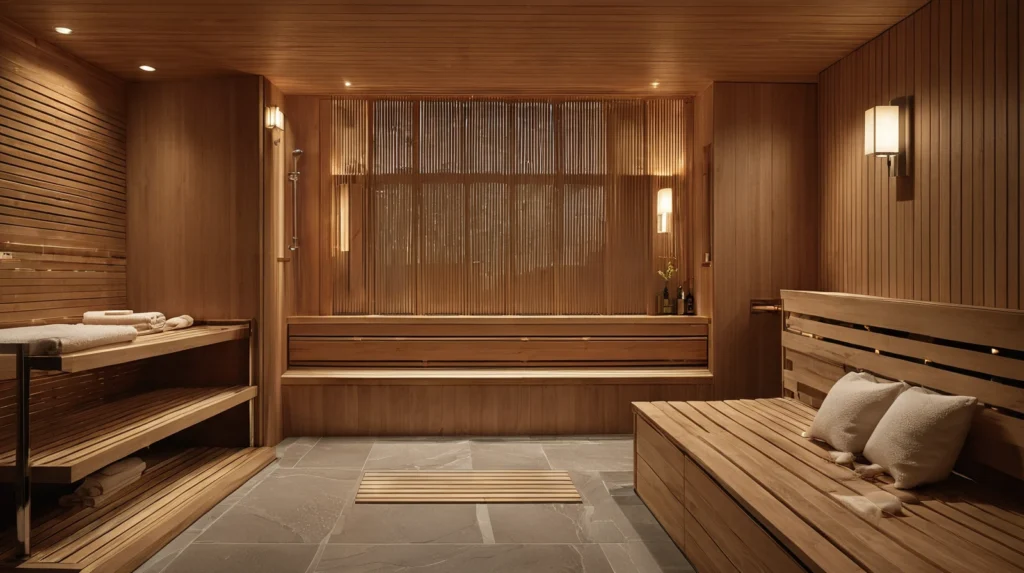
Executive Summary For hotels, clubs, and premium residences in Hong Kong and Macao, sauna programming should be designed as an evidence-led wellness service, not just a design feature. Clinical literature supports benefits, but operational success depends on protocol quality, screening, and maintenance. What the Evidence Says Systematic review data indicates regular dry sauna bathing provides potential cardiovascular and wellbeing benefits. Structured Exposure Most studies use structured heat exposure windows and controlled cool-down periods, rather than random behavior. Operational Impact The biggest gains come from consistent protocols, maintenance quality, and clear contraindication guidance. Engineering Implications for HK/Macao Projects To deliver a premium experience, engineering must align with usage: Session Structure: Define heat duration, breaks, and hydration prompts at the commissioning stage. Hygiene Engineering: Align ventilation, drainage, and cleaning SOPs with high-turnover hospitality usage. User Safety: Integrate clear safety signage and staff-led instructions in English and Chinese. System Integration For mixed hot/cold recovery flows, pair thermal areas with iCoolSport cold systems where clinically appropriate: Compact XP Compact XP Dual Temp Turbo Typhoon Dual Temp References Laukkanen T, et al. Clinical Effects of Regular Dry Sauna Bathing… Evid Based Complement Alternat Med. 2018.
Wellness Engineering Hong Kong (2026): Buyer’s Guide for Hotels, Clubhouses & Luxury Residences
Wellness Engineering Hong Kong (2026): Buyer’s Guide for Hotels, Clubhouses & Luxury Residences Hong Kong and Macau are moving into a new procurement cycle for premium wellness infrastructure. In both markets, wellness is no longer treated as a decorative lifestyle add-on; it is becoming a measurable operating pillar tied to guest retention, room-rate resilience, and brand trust. For owners, asset managers, and technical teams, the practical question is not whether to include wellness systems. The real question is how to specify systems that perform consistently under real operating stress, not just at handover. İçindekiler Why wellness engineering hong kong is a 2026 decision window for HK/Macau buyers HK vs Macau Operating Reality: Same Category, Different Stress Patterns What to specify in wellness engineering hong kong before tender lock Common Failure Modes in Premium Wellness Projects Recommended Internal Product Pathway (Use-Case Aligned) Internal Technical Reading Path Buyer Evaluation Checklist (Owner / PM / Technical Lead) FAQ Soft CTA Hard CTA JSON-LD Projects fail when procurement focuses on equipment lists instead of engineered outcomes. In live hospitality operations, guest clustering, seasonal humidity, maintenance timing, and operator behavior can destabilize systems that looked “correct” on paper. In 2026, buyers need a reliability-first framework that connects thermal architecture, treatment logic, controls, and SOP discipline into one commercial operating model. Why wellness engineering hong kong is a 2026 decision window for HK/Macau buyers The macro backdrop is supportive, but execution quality is the differentiator. Global wellness expansion remains strong while premium hospitality in Hong Kong and Macau continues to compete on experiential consistency. Assets that run stable wellness circuits gain repeat usage and better perception; assets with inconsistent systems absorb hidden OPEX and reputational leakage. Two numeric signals from the latest market dataset are especially relevant for procurement confidence: In 2024, the global wellness economy reached USD 6.8 trillion (GWI), confirming category scale and momentum. In 2024, GDP per capita remained premium in both markets: USD 54,074.69 (Hong Kong) and USD 72,004.74 (Macau), supporting high-value wellness positioning for luxury hospitality and residences. These figures matter because they frame both demand potential and buyer willingness to pay for reliability instead of low-spec shortcuts. HK vs Macau Operating Reality: Same Category, Different Stress Patterns Hong Kong and Macau both support premium wellness projects, but usage behavior differs in ways that affect engineering choices. Hong Kong profile Hong Kong projects often combine high-frequency usage with tighter technical footprints. That pushes teams toward compact architectures with strong control visibility, disciplined thermal recovery, and operator-friendly intervention logic. Macau profile Macau properties frequently experience occupancy wave effects tied to events and peak visitation windows. Systems must recover quickly from clustered demand without visible degradation in temperature stability or water quality. Procurement implication A copied template from one market to the other can underperform. Buyers should require market-fit assumptions in technical submissions: peak scenario behavior, recovery-time criteria, and documented alarm-response pathways. What to specify in wellness engineering hong kong before tender lock The safest path is to define performance outcomes first, then select components. Thermal circuit specification Define the intended guest journey and thermal sequence in engineering terms: cold phase entry conditions heat/contrast transitions neutral recovery requirements repeat-session logic Then formalize acceptance thresholds: in-session drift tolerance recovery time-to-target after peak entries event-trigger thresholds for operator action Without these thresholds, “comfort complaints” become costly and subjective post-opening. Water treatment architecture Treatment decisions should be scenario-driven. Require bidders to show behavior under: peak bather load delayed intervention windows sensor drift contingencies high-humidity operation The correct choice is not a marketing label; it is the architecture that produces stable quality with your staffing and usage profile. Controls and monitoring discipline Controls are not optional UX extras. They are uptime infrastructure. Procurement packages should include: role-based operator dashboards alarm severity logic documented escalation actions measurable post-event recovery targets Common Failure Modes in Premium Wellness Projects Average-load sizing bias Systems sized around average occupancy frequently fail during visible peak periods. Procurement must test against surge behavior, not mean demand. Handover without operational SOP depth Technical handover alone is insufficient. Facilities need concise runbooks for first-line operators, including contraindication checks, protocol tiers, and incident response. Lifecycle ambiguity If maintenance ownership, calibration intervals, and uptime accountability are vague, reliability decays quickly and costs become reactive. Recommended Internal Product Pathway (Use-Case Aligned) For HK/Macau projects that prioritize reliability and control under commercial load: compact cold-plunge system for premium sites high-demand chiller for commercial recovery pools team recovery pool platform for hospitality wellness operator control interface for wellness circuits Selection should be based on throughput profile, technical-space constraints, and SOP maturity—not brochure parity. Internal Technical Reading Path Use these internal references to align procurement and operating standards: Ozone vs UV Filtration in Commercial Cold Plunge Pools The Science of Cold Exposure Buyer Evaluation Checklist (Owner / PM / Technical Lead) Engineering acceptance criteria peak-load thermal stability thresholds documented recovery-time target after burst entries documented treatment architecture tied to realistic operating scenarios sensor and alarm governance documented Operations readiness criteria SOP pack includes protocol tiers and escalation logic operator controls are role-appropriate and testable maintenance cadence and calibration ownership are explicit Commercial accountability criteria uptime KPI baseline defined before opening intervention frequency and response-time KPIs defined lifecycle support model contracted with reporting cadence FAQ Why is wellness engineering different from buying spa equipment? Wellness engineering combines thermal control, hydraulics, treatment behavior, control logic, and operating SOPs into one measurable commercial system. Hardware alone does not guarantee stable guest outcomes. Is one fixed setpoint enough for commercial success? No. Commercial reliability depends on controlled performance across multiple occupancy and user scenarios. Setpoint numbers without recovery behavior and intervention logic are not enough. What drives ROI fastest in premium wellness assets? Reliability: high uptime, fewer visible failures, consistent guest experience, and predictable maintenance behavior. These factors usually protect revenue more than feature-heavy but unstable deployments. Soft CTA If your project is in concept or tender phase, run a technical feasibility and risk-alignment workshop before locking architecture. Early engineering alignment usually cuts late-stage rework
Ozone vs UV Water Treatment for HK & Macau Wellness Facilities: 2026 Decision Framework
Ozone vs UV Water Treatment for HK & Macau Wellness Facilities: 2026 Decision Framework Primary keyword: ozone vs uv filtration hong kongSecondary keywords: commercial spa water treatment macau, pool disinfection engineering, ORP controlOptimized slug: ozone-vs-uv-water-treatment-hk-macau İçindekiler Understand mechanism before comparing outcomes HK/Macau decision variables that matter most Hybrid strategy often outperforms single-method ideology Commercial implications: reliability, not novelty, drives trust Internal equipment and content pathway Soft CTA Hard CTA FAQ Sources (2024–2026) Implementation checklist for engineering teams Compliance and communication note Water-treatment selection in commercial wellness facilities is frequently reduced to a simplistic debate: ozone versus UV. In reality, the engineering decision is contextual. Site load pattern, hydraulic design, sensor discipline, and maintenance capability determine performance more than technology labels. For Hong Kong and Macau projects—where utilization density and climate conditions add stress—selection should follow a systems framework, not brand narratives. A useful 2026 approach is to evaluate disinfection architecture against three operating goals: microbiological confidence, guest-facing water quality consistency, and maintenance predictability under peak occupancy. If a method performs well in one dimension but fails in another, total operating value declines. Understand mechanism before comparing outcomes UV and ozone act differently. UV is point-of-contact irradiation; effectiveness depends on dose and water clarity at treatment point. Ozone is an oxidant with broader interaction behavior that can support water quality outcomes beyond direct pathogen inactivation when integrated correctly. Neither approach is plug-and-play in commercial reality. The correct comparison asks: under your turnover rate, bather load, and staffing model, which architecture yields more stable outcomes with fewer intervention events? This moves the decision from marketing claims to operational engineering. HK/Macau decision variables that matter most First, turnover resilience. During burst usage, systems face transient contaminant spikes. Treatment must recover quickly without causing guest-visible instability. Second, sensor governance. ORP and residual controls are only as reliable as calibration and maintenance discipline. Third, maintenance envelope. A theoretically superior method can underperform if required upkeep is unrealistic for the operating team. Operators should also model failure modes explicitly. What happens when flow drops, sensor drifts, or maintenance windows are delayed? A robust architecture degrades gracefully and signals early, rather than failing abruptly. Hybrid strategy often outperforms single-method ideology For many premium facilities, the most practical answer is hybridization: combine strong mechanical filtration with an appropriate disinfection complement and explicit control logic. This is especially relevant in mixed-use environments where guest behavior and occupancy profiles vary through the day. Engineering teams should define clear trigger thresholds for intervention and document them in SOPs. “Measure, trend, intervene” is a better reliability model than occasional manual correction after complaints. Commercial implications: reliability, not novelty, drives trust Guests rarely ask which treatment technology is installed; they evaluate clarity, odor profile, comfort, and availability. From a commercial perspective, uptime and consistency are the monetizable outcomes. A stable system also reduces emergency maintenance and protects staff efficiency. Global wellness market expansion through 2024 (as reported in 2025 releases) indicates continued demand momentum. But demand growth does not compensate for weak operations. In premium hospitality, engineering reliability remains the primary differentiator. Internal equipment and content pathway Compact XP Compact XP Dual Temp Turbo Typhoon Chiller Related articles: Ozone vs UV Filtration Guide (existing) and Heat Shock Proteins and Sauna Therapy. Soft CTA Before selecting a treatment stack, run a scenario workshop: normal day, event surge, and maintenance-delay day. Design for the hardest day, not the average day. Hard CTA Need an engineering-grade treatment decision for your HK/Macau project? Contact Kung Sheung for a site-specific decision matrix covering treatment method, controls, maintenance load, and commissioning plan. FAQ 1) Is UV always lower-maintenance than ozone? Not necessarily. Maintenance burden depends on full-system design, sensor management, and operating discipline. 2) Is ozone always “stronger” than UV? They are different mechanisms. Real performance is context-dependent and should be evaluated against your operating envelope. 3) Should treatment decisions be separated from hydraulic design? No. Treatment efficacy and hydraulic behavior are tightly linked in commercial wellness environments. Sources (2024–2026) WHO – Physical activity fact sheet (updated 2024) Global Wellness Institute – Global Wellness Economy Monitor 2025 (data incl. 2024) Macao DSEC – Statistics portal Hong Kong C&SD – official statistical portal Implementation checklist for engineering teams From a project-management perspective, the most reliable path is to convert the wellness concept into measurable commissioning gates. Before handover, teams should validate thermal recovery times, verify flow stability under burst loading, and stress-test controls against realistic operating scenarios. A practical method is to run three scripted days: standard occupancy day, high-cluster day, and delayed-maintenance day. If outcomes are stable across all three, operating risk drops materially. Documentation quality is equally important. Operators need concise SOPs that connect user-facing protocol instructions to backend control actions. For example, if temperature drift exceeds threshold, the SOP should specify both guest communication and technical remediation steps. This prevents handoff gaps between operations and engineering. In premium environments, perceived quality is often determined by the speed and clarity of response when deviations appear. Finally, teams should establish a monthly analytics cycle. Review uptime, guest throughput, intervention counts, and recovery windows; then tune controls incrementally. Small, regular optimization beats infrequent large interventions. This disciplined loop turns the facility from a static installation into a continuously improving asset and supports long-term commercial reliability in high-demand markets such as Hong Kong and Macau. Compliance and communication note All wellness claims should remain evidence-aligned and avoid medical overstatement. Position operational outcomes around consistency, comfort, safety, and recovery support, while directing guests with health concerns to appropriate medical guidance. This protects brand credibility and reduces legal risk. In engineering-led wellness operations, transparent communication is part of system quality: what guests can expect, how sessions should be used, and how support is provided if discomfort occurs. Need project-ready guidance? Request Engineering Quote or reach us for a WhatsApp Consultation.